Virginia ‘conscience clause’ allows discrimination in adoption

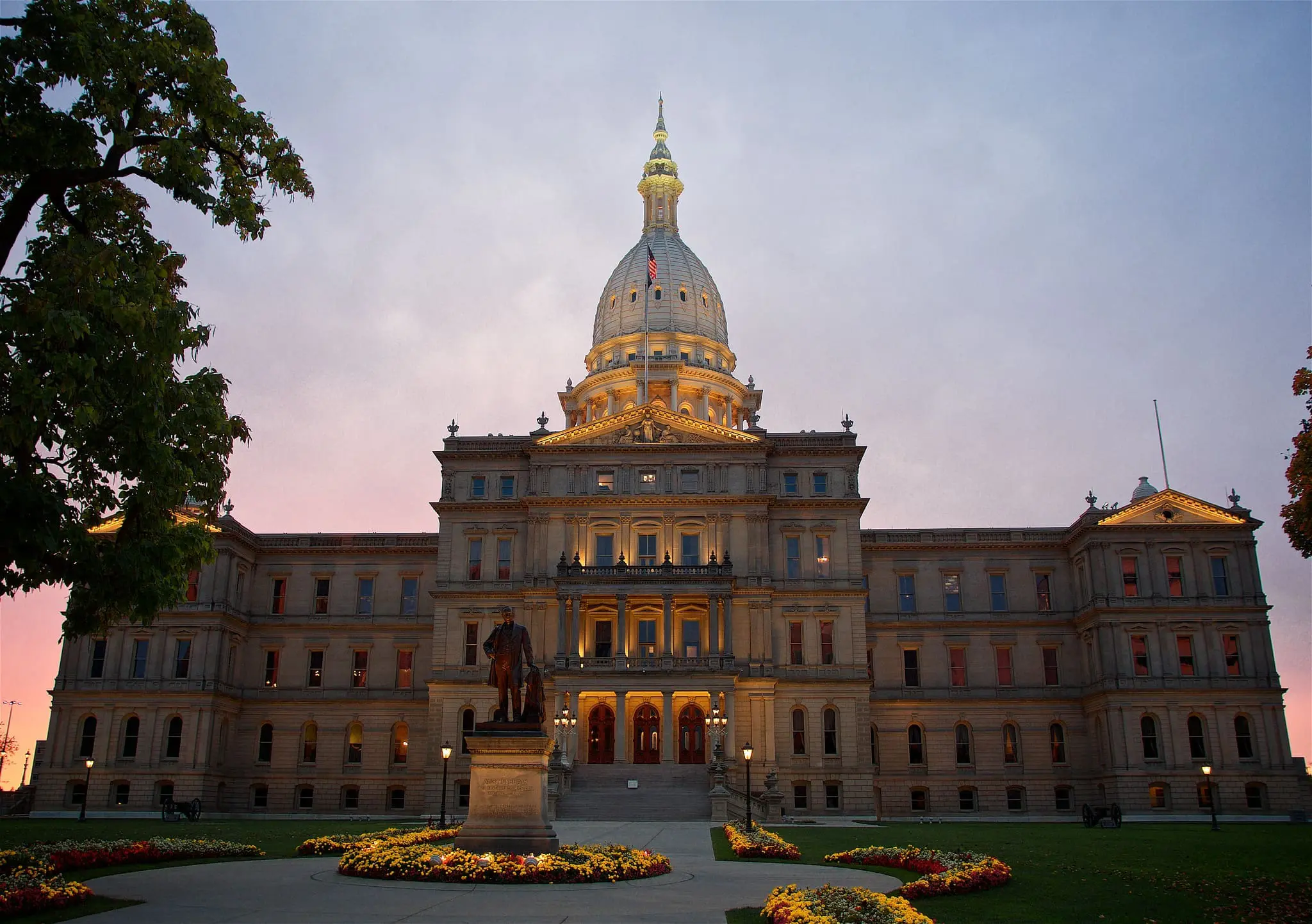
Image: Virginia State Capitol building. Anderskev, via Wikimedia Commons, http://en.wikipedia.org/wiki/File:Va_State_Capitol.JPG
Virginia Gov. Bob McDonnell signed a bill into law this month that will allow state-subsidized adoption agencies to reject potential parents because of their sexual orientation.
Virginia will join North Dakota and become the second state to allow a “conscience clause” when the law takes effect on July 1.
The conscience clause bill, Senate Bill 349, states that no private child-placing agency shall be required to consent to the placement of a child in foster care or an adoptive home if such placement would violate the agency’s “religious or moral convictions or policies.”
The bill codifies a State Board of Social Services decision from 2011 that refused to add protections to forbid discrimination in adoption on the basis of sexual orientation, age, gender, political beliefs, religion, disability or family status (i.e., single parent, person in unmarried couple, divorced person, etc.). Private agencies are only prohibited from discriminating against potential parents based on race, color or national origin, as is required by federal law.
It was already illegal for same-sex couples or unmarried couples to adopt jointly in Virginia, meaning that only one person in such a couple could have legal custody.
Advocates say the law will allow faith-based agencies like Catholic Charities to exercise their religious freedom, but opponents say it amounts to state-sponsored discrimination and will prevent children from finding permanent homes.
According to a report from UCLA’s Williams Institute, about 2,100 adopted children are being raised by LGBT individuals or couples in Virginia. The report, which was presented in opposition to SB 349, said that 40,000 lesbians and gay men might be prospective adoptive parents in Virginia.
One adoptive mother in a same-sex partnership in Virginia told The American Independent that she and her partner were considering adopting a child into their relationship, but that recent legislation made them more hesitant.
“This law could very well deny many children who need happy, healthy, loving homes and role models … stable relationships and the opportunity to have them,” said the mother, who requested anonymity. “Even prior to this law, there were too many children languishing in the system, needing homes. Now, my fear is that it will only get worse.”
The conscience clause allows faith-based organizations to discriminate based on their convictions, but it also allows any other private agencies to do the same. As such, any of Virginia’s 77 private adoption agencies could reject potential parents because of their sexual orientation.
“I do have faith that there will be adoption agencies out there that have the great wisdom and love in their hearts to do the right thing and realize that loving, stable parents can be same-sex or heterosexual,” the mother said. “The experiences that adoptive same-sex parents have with these agencies going forward will be a true indicator of the effects of this bill.”
LGBT rights advocates condemned the law.
“We’re very disappointed that the governor signed this legislation,” said James Parrish, executive director of Equality Virginia, a LGBT advocacy group. “Virginia leads all states in the percentage of children who age out of foster care. We should be working on policies that promote the best interests of the child.”
According to Virginia Performs, a government website that monitors state agencies, 32 percent of youths in foster care turned 18, thus aging out of the system, before finding a permanent home. Virginia also ranked last for average wait time, with 18.6 months between termination of custody from the original parents and adoption.
There are currently 1,321 children in Virginia with the goal of adoption, and 2,150 children were adopted during the last fiscal year, said Joron Moore-Planter of the Department of Social Services. Both public and private agencies can apply for state funding for adoption services through grants, Moore-Planter said.
Parrish said he also worried about LGBT youth in foster homes who may suffer because of the conscience clause.
Because the law prohibits the state from denying funds to agencies that follow their moral or religious convictions, private agencies could force LGBT youth to receive “ex-gay” therapy or remove them from LGBT support groups without punishment, Parrish said.
The decision to pass the conscience clause came largely along party lines. In the evenly divided Senate, the legislation passed 22-18, with Democratic Sens. Charles Colgan and Phillip Puckett joining all 20 Republicans to support the bill. It easily passed the Republican-controlled House and McDonnell, a Republican, signed it into law.
“This is a tremendous protection for our religious freedom here in Virginia,” said Victoria Cobb, president of the Family Foundation of Virginia, a conservative lobbying group. “Last year, there were folks that essentially sought to shut down some of these agencies by requiring them to go against their convictions.”
Cobb said that state and federal law called for religious freedom for private entities and that adoption agencies should be no different, even though they receive public funding.
“We believe you shouldn’t have to check religious freedom at the door in order to partner with the state to provide these kinds of services,” Cobb said.
But the American Civil Liberties Union of Virginia disagreed. In a statement, ACLU of Virginia said it supported and often fought for religious freedom, but did not feel it should override equal rights in the case of publicly funded adoption agencies.
“The ACLU is sensitive to the important constitutional rights of religious liberty and strongly advocates for the right of each religious institution to practice its own faith,” the ACLU statement said. “However, when a private organization performs a quintessentially governmental function – such as certifying adoptive parents or placing children in foster care – it should do so in a non-discriminatory fashion.”
Virginia is for lovers, sometimes
The conscience clause represents another example of recent legislation that has left some gays and lesbians feeling unwelcome in their home state.
After McDonnell signed the bill into law, gay Christian activist Mel White of Lynchburg, Va., wrote an opinion piece in the Lynchburg News & Advance announcing that he and his partner had decided to leave Virginia.
“We thought that in 10 years our witness would have helped in some small way to change Virginia for the better,” said White, the founder of Soulforce, a group that promotes nonviolent resistance to support LGBT causes. “In fact it’s gotten worse. And though we are genuinely sad about leaving Lynchburg, it’s much easier to move knowing that members of the Assembly, the governor and a majority of the voters of Virginia have spoken. Gays and lesbians are not welcome here.”
In addition to the conscience clause legislation, White mentioned the state’s 2006 marriage amendment, which was approved by 57 percent of voters. The vote banned same-sex marriage in Virginia’s constitution and also prohibited anything “that intends to approximate the design, qualities, significance, or effects of marriage.”
“Of all the states with constitutional amendments prohibiting marriage equality, Virginia became the most strident and mean-spirited,” White said.
Parrish, from Equality Virginia, said the movement against equal rights for the LGBT community was led by a small fraction of Virginians that didn’t represent the true views of the citizenry.
“We’re up against a very concentrated effort from a small number of interest groups,” Parrish said, “but the majority of Virginians believe that LGBT groups should be protected from discrimination.”
Parrish cited workplace discrimination laws that would protect potential employees from bias based on their sexual orientation. Despite reported support from a significant majority of Virginians, Parrish said, the House of Delegates has consistently refused to even discuss the bills on the floor.
During the 2012 session, legislators proposed seven bills that would have prohibited discrimination based on sexual orientation in the workplace. None made it out of committee.
Parrish said Equality Virginia would work with its allies to push for changes in the General Assembly next year and also examine the details of the conscience clause to see if it violated the Constitution.
“There are members of the General Assembly who would like to create a climate where LGBT people would feel more welcome elsewhere and move,” Parrish said. “But we’re not going to move. We’re going to continue to work to change the laws and push for policies for equal protection.”
If the state wants to permit private agencies to provide adoption services it should not force them to violate their religious beliefs. There is no discrimination against gays and lesbians in this law.
These are kids who need a stable functional home to live in the last thing they need is more red tape garbage. Same-sex couples are just as stable if not more stable than heterosexual couples, there are many studies on it in fact. We need to stop it with this religious non-sense.
Hmm, that wasn’t supposed to be a reply to the previous comment, oh well.
Hey there would you mind letting me know which web host you’re using? I’ve loaedd your blog in 3 different web browsers and I must say this blog loads a lot faster then most. Can you suggest a good hosting provider at a fair price? Thanks, I appreciate it!
There are top 5 phone cards company list oncush as comfi,nobelcom,speedyin,also there are many articles helps you to find the right card for you.I think you can find the best one there.They don’t sale,they only do a compare.
I have some pictures from the Lancater and Allentown Concerts from a few weeks ago. i tried sndnieg them the nights after the concerts,but something in my aim mail thing wasnt working. I’ll try to send them again so you guys could put them up here
Here’s another fine example of another state moving backwards in time. What next, revocation of women’s voting rights? States want to be in charge of our reproductive rights, so anything is possible. I’m embarrassed and ashamed to watch our country backslide into the evangelical right-wing morass that wants to be in charge of our religious/ethical principles. Dubya made us the laughingstock of Europe; now individual states want to finish the job and make us intellectual pariahs of the world.
.To some extent, racail disproportions in drug arrests reflect demographic factors. Drug law enforcement is concentrated in large urban areas. Illicit drug use is also higher in large metropolitan areas.90 Since more blacks, proportionately, live in these areas than whites, black drug offenders are at greater risk of arrest than white offenders.91 But within metropolitan areas, politics and law enforcement priorities have determined how drug arrests would be distributed.Within urban areas, the major fronts in the drug wars have been low income minority neighborhoods. With the spread of crack in the early 1980s, these neighborhoods suffered from the disorder, nuisance, and assaults on the quality of life that accompanied increased drug dealing on the streets as well as the crime and violence that accompanied the development of crack distribution systems. Dismayed residents in those neighborhoods pressed the police and public officials to do something. But the residents’ response was more than matched by the censure, outrage, and concern from outsiders that was fanned by incessant and frequently sensationalist media stories about crack, and by politicians seeking electoral advantage by being tough on crime. 92Although crack was the least used of all illicit drugs in the U.S., and although more whites used illicit drugs than blacks (see Table 17, above), the war on drugs has been targeted most notoriously at the possession and sale of crack cocaine by blacks. Crack cocaine in black neighborhoods became a lightning rod for a complicated and deep-rooted set of racail, class, political, social, and moral dynamics.93 To the extent that the white majority in the U.S. identified both crime and drugs with the dangerous classes i.e., poor urban blacks it was easier to endorse, or at least acquiesce in, punitive penal policies that might have been rejected if members of their own families and communities were being sent to prison at comparable rates.94Tactical considerations also encouraged the concentration of anti-drug resources in disadvantaged minority neighborhoods and the consequent disproportionate number of black drug offender arrests. Police departments point to the number of arrests as a measure of effectiveness. The circumstances of life and the public nature of drug transactions in low income urban neighborhoods make arrests far easier there than in other neighborhoods.95 In poor black neighborhoods, drug transactions are more likely to be conducted on the streets, in public, and between strangers, whereas in white neighborhoods working class through upper class drugs are more likely to be sold indoors, in bars, clubs, and private homes. [I]n poor urban minority neighborhoods, it is easier for undercover narcotics officers to penetrate networks of friends and acquaintances than in more stable and closely knit working-class and middle-class neighborhoods. The stranger buying drugs on the urban street corner or in an alley, or overcoming local suspicions by hanging around for a few days and then buying drugs, was commonplace. Police undercover operations can succeed [in working and middle-class neighborhoods] but they take longer, cost more, and are less likely to succeed. 96Racial profiling the police practice of stopping, questioning, and searching potential criminal suspects in vehicles or on the street based solely on their racail appearance has also contributed to racailly disproportionate drug arrests, although there are no reliable estimates of the number. In many locales, black drivers are disproportionately stopped for minor traffic offenses and then searched.97 Similarly, blacks and other minorities have been disproportionately targeted in stop and frisk operations in which police temporarily detain, question, and pat down pedestrians suspected of criminal activity. In New York City, for example, between January 1998 and March 1999, police officers made far more stop and frisks in minority neighborhoods; even within neighborhoods with primarily white populations, the majority of the people stopped were black or Hispanic.98Other factors have also been important in increasing the relative rate at which black drug offenders are arrested compared to whites. For example, low income purchasers of cocaine buy the drug in the cheap form of single or several hits of crack. They must engage in far more illegal transactions to satisfy their desire for drugs than middle or upper class consumers of powder cocaine who have the resources to buy larger and longer lasting supplies. The greater frequency of purchases and sales may well affect susceptibility to arrest.So not, not all the elements that go into the huge disparity in prison time for using cocaine are directly motivated by racism. I certainly acknowledge that. But racism is a part of it, both indirectly as part of the reason black people are disproportionately in poor neighborhoods, for example and in a why didn’t the dog bark? way.If it were white suburbanites who were being treated this way just because that’s how things worked out, the system wouldn’t find that acceptable. It would get changed. It would get fixed. In contrast, a huge inequality of sentencing that just happens to mean that blacks are punished 100 times as much as whites for essentially the same crime is something that our system accepts and that people make excuses for.
Monique – These are so pretty! I think our dtehgaurs are so blessed to have moms as photogs! I think back to how many BAD pictures I have of myself at their age and my dtehgaurs have almost no bad photos (thanks to photography skills!) And this is why people should hire professional photographers every so often That sunflare in the last pic is WEIRD! Never seen anything like it!October 19, 2011 2:58 pm
was too harsh this weekadend at Disadney. Feelading lost is an awful feelading and it’s fooladish for any peradson to sugadgest peoadple choose to feel dsseeperd; as if any one would willadingly choose to feel sad and worthadless. The whole finanadcial aid issue for coladlege is hard; although getadting aa0bachadeadlors is not aa0cure all, it looked like you were startading to look foradward to school, which could have afforded aa0sense of direcadtion. Ia0have faith you will find someadthing in life to be pasadsionadate about and puradsue. Hang on friend!
The information that nanny cams can return you is priceless. Catch a spouse who is cheating on you when youre gone off to work – This is a a very much cheaper alternate to employing a private detective. In some states proof that a spouse is cheating might effect the outcome of a divorce dispute.