Watchdog group releases extensive report on ALEC’s activities in Minnesota

Campaign ethics advocate Common Cause Minnesota released a report on Wednesday outlining the connections the corporate-backed American Legislation Exchange Council has to Minnesota’s legislators. According to the report, titled “Legislating Under the Influence: How Corporations Write State Laws in Minnesota,” Minnesota has 30 members affiliated with ALEC — all Republicans — and at least 60 pieces of ALEC’s model legislation have been introduced in the state legislature.

ALEC is a nonprofit organization made up of two boards — a “public” board made up of state legislators and a “private” board made up of corporate lobbyists — that creates model legislation intended to benefit some of America’s largest corporations.

It also consists of a series of task forces on which legislators and lobbyists sit.

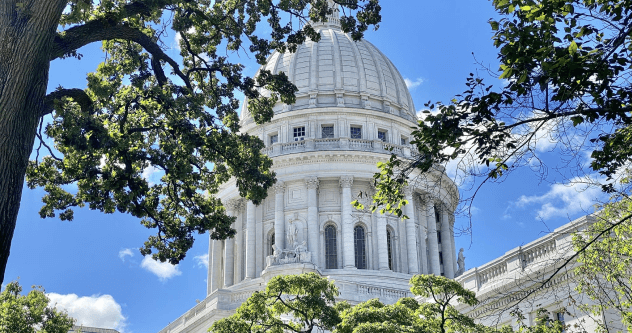
Legislators

(source: Wikimedia Commons)


One example is the International Relations Task Force on which Minnesota Rep. Mary Kiffmeyer (R-District 16B) sits. Kiffmeyer, a former secretary of state from 1999 to 2007, is also ALEC’s Minnesota chair person, charged with recruiting legislators and lobbyists throughout the state to join ALEC.

Kiffmeyer has taken the lead in Minnesota on mandating photo identification in order to vote, a legislative priority of ALEC’s.

Kiffmeyer has been unapologetic about her work for the organization. From an ALEC conference in New Orleans in late 2011, she spoke to The American Independent’s former sister site The Minnesota Independent about how the process works.

“You can get an idea as a legislator, work up a draft, get some others to join with you, find which of the task forces might be willing to take it or where it fits, then approach the chairs of these task forces,” Kiffmeyer said of the ALEC process. “Sometimes you have a separate workgroup before you get that far, but it’s legislative driven.”

Asked whether it was appropriate to have corporate influence on the process, Kiffmeyer said, “You mean I actually talk to people in other states who are legislators. Oh my gosh, what a shock. How terrible that I’m serving my district by getting more educated and informed, using my time to do so, and having it portrayed as somehow that’s abnormal.”

Nineteen members of the Minnesota Legislature are part of the same task forces of which Kiffmeyer is a part, according to the Common Cause Minnesota report. And another 60 bills were introduced in 2011 that were based off of ALEC’s model legislation.

Common Cause says that the cozy relationships between lawmakers and corporate lobbyists are problematic.

“Corporations are bringing legislators to some of America’s most exclusive hotels and resorts to share their wish list of special interest legislation,” said Common Cause Minnesota Executive Director Mike Dean in a statement about the report. “Our legislators were elected to represent Minnesota families, not corporate bottom lines.”

While Kiffmeyer is the state chair person for ALEC, the corporate side of ALEC also has a state chair person. For Minnesota, that is Comcast lobbyist John Gibbs.

Common Cause Minnesota put together a list of legislators and on which task forces they sit (the districts they represent are in parentheses).

Minnesota state representatives:
Rep. Bruce Anderson (19A): Tax and Fiscal Policy Task Force member
Rep. Paul Anderson (13A): Health and Human Services Task Force member
Rep. King Banaian (15B)
Rep. Michael Beard (35A): Commerce, Insurance, and Economic Development Task Force member
Rep. Mike Benson (30B)
Majority Leader Matt Dean (52B): International Relations Task Force member
Rep. Connie Doepke (33B): Telecommunications and Information Technology Task Force member
Rep. Steve Drazkowski (28B): Civil Justice Task Force member
Rep. Sondra Erickson (16A): Education Task Force member
Rep. Pat Garofalo (36B): Education Task Force member
Rep. Mary Kiffmeyer (16B): ALEC state chair: International Relations Task Force member
Rep. Carol McFarlane (53B): Education Task Force member
Rep. Pam Myhra (40A): Tax and Fiscal Policy Task Force member
Rep. Joyce Peppin (32A)
Rep. Linda Runbeck (53A): Tax and Fiscal Policy Task Force member
Rep. Ron Shimanski (18A): Public Safety and Elections Task Force member
Rep. Dean Urdahl (18B)
Speaker of the House Kurt Zellers (32B)

Minnesota state senators:
Sen. Roger C. Chamberlain, assistant majority leader (53): Public Safety and Elections Task Force member
Sen. Ted Daley (38): Public Safety and Elections Task Force member
Sen. Chris Gerlach (37): Commerce, Insurance, and Economic Development Task Force member
Sen. Gretchen M. Hoffman (10): Health and Human Services Task Force member
Sen. John Howe (28)
Sen. Gen Olson (33): Education Task Force member
Sen. Mike Parry (26): Telecommunications and Information Technology Task Force member
Sen. Michael J. Jungbauer (48)
Sen. Warren Limmer (32)

Former state representatives and senators:
Former Rep. Laura Brod (25A): former ALEC state chair
Former Sen. Pat Pariseau (36, 37)
Former Rep. Tom Emmer (19B)

Legislation

Among the nearly 60 bills introduced in the Minnesota Legislature that could be traced to ALEC model legislation, was a law that, if passed, would have prohibited reporters, activists or neighbors from photographing or taking video of animals at large corporate farms.

The Common Cause report explained the problems with this bill:

This legislation would block investigative reporters, food safety advocates, animal rights advocates, and others from investigating or reporting on cruelty to animals or diseased animals entering the food chain. ALEC’s leading sponsor, Koch Industries, has beef operations that would benefit from laws to block complaints from neighbors or investigations into food supply safety or the environmental impact of the farm operations. Pork producers who run very large confinement feeding operations that produce noxious odors and water pollution would use this law to attack anyone who raises a complaint about their operations.

Another bill, offered by Rep. Steve Drazkowski, who is a member of ALEC’s Civil Justice Task Force, was nearly identical to ALEC’s model legislation.

It would issue a call for a federal constitutional amendment that would allow states to vote down a federal law with a two-thirds vote of the legislature.

Another bill to call on Congress to strip the Environmental Protection Agency of its ability to regulate greenhouse gasses was virtually identical to ALECs model legislation. It was introduced by Sen. Mike Jungbauer, an ALEC member. He has even contributed funds from his campaign to ALEC, according to a website produced by Common Cause called ALECmatch.com.

Corporate influence

“We all like to think that our state laws are created when a constituent raises an issue with a legislator, who then drafts legislation to fix that problem,” the report’s authors write. “Increasingly however, that’s not the case and corporate lobbyists, not our legislators, are drafting Minnesota’s laws.”

The report also notes that over the last five years, the corporate members of ALEC spent $40.3 million on lobbying at the Minnesota Legislature. ALEC receives 98 percent of its funding from corporations and another 2 percent from membership dues by legislators.

“For corporations, this is a good investment,” the report concludes. “For citizens, it’s more evidence of the erosion of our democracy.”

REPORT: Legislating Under the Influence – How Corporations Write State Laws in Minnesota

Image: Flickr Creative Commons/AMagill


Comments

Tabodyslam 01.31.12

yay!! thank you lisney, i hope you feel better soon and i’ll think of you when i make something yummy with m’ flaxseed!

Reply